Most Gatlinburg visitors stick to the Parkway strip and never realize the largest independent artisan community in North America sits a short drive up the road: the Great Smoky Arts and Crafts community.
If you have ever timed a trip around an arts festival, this eight-mile loop off Glades Road is an entire day of that feeling. Roughly 100 working studios welcome you to pull up a stool and watch.
Here is how to explore the loop without rushing past the best of it.
What the Great Smoky Arts and Crafts Community Actually Is
The Great Smoky Arts and Crafts Community is not a shopping mall with a craft theme. It is a chartered collective of independent artisans that has been operating since 1937, making it one of the oldest organized maker communities in the country.
The loop runs about eight miles along Glades Road and Buckhorn Road, just off East Parkway. Roughly 100 studios, workshops, and small galleries line the route. The official community site offers a downloadable map to help plan your stops.
What sets it apart from downtown Gatlinburg is simple. These are working studios, not souvenir shops.
The Crafts You Can Watch Being Made
The best part of the loop is not buying. It is standing three feet from someone shaping something by hand and watching the whole process unfold.
Pottery and Ceramics
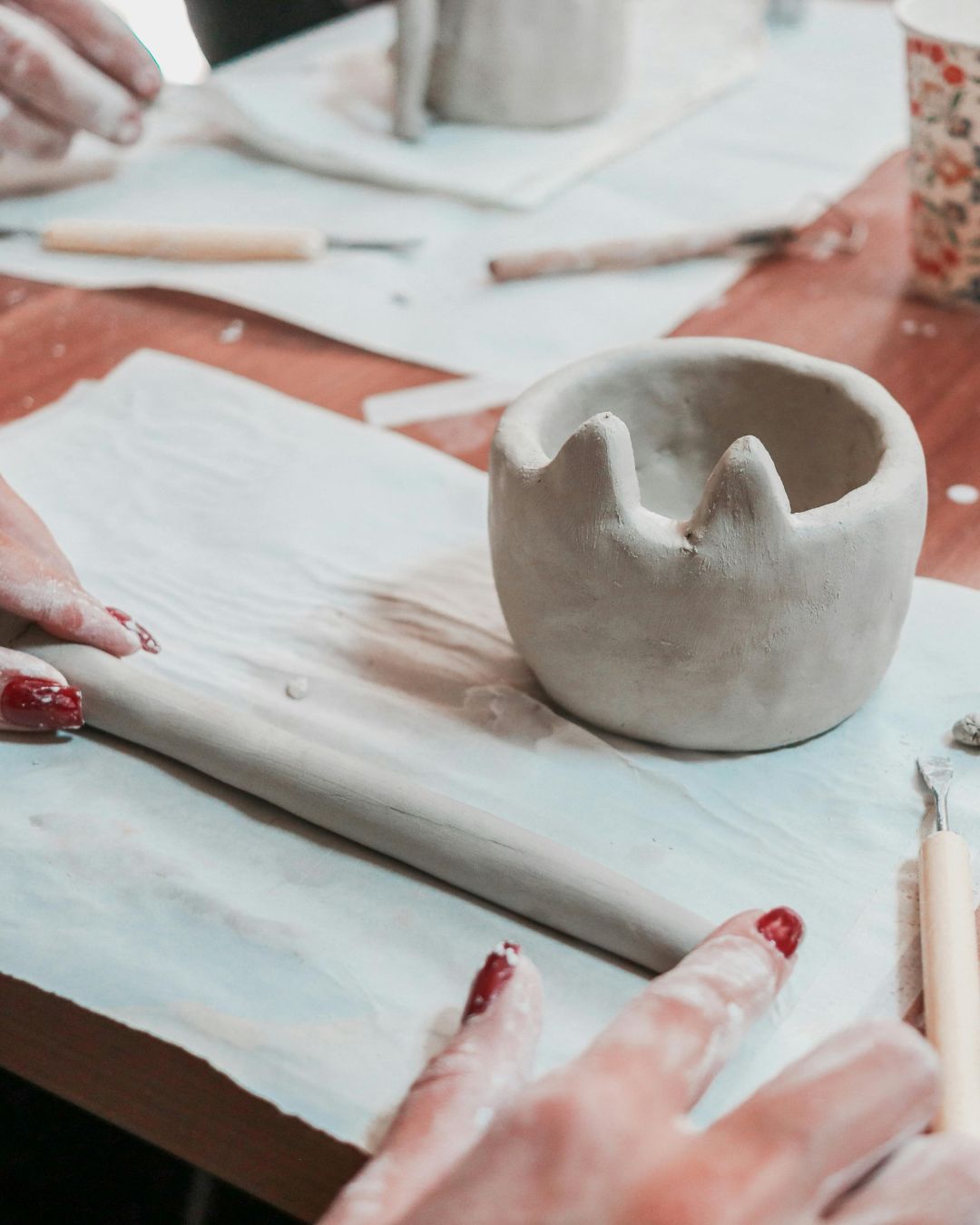
Hand-thrown pottery is one of the most common studios along the route. You can watch a potter center a lump of clay on the wheel and pull a bowl out of it in a few minutes.
Finished pieces tend to run in Appalachian earth tones, deep greens, warm browns, and speckled glazes that look like they belong on a farmhouse shelf. Most studios let you pick up and handle the work, which is how you start to feel the difference between handmade and factory-produced.
If you are drawn to a home that leans toward traditional decor, buying a bowl directly from the potter who threw it adds a story to every piece on the shelf.
Broom Making and Chair Caning
These are traditional Appalachian crafts you will not find many places outside this loop. Broom makers work with broomcorn and hand-carved handles, shaping each one with techniques that predate power tools by centuries.
Chair caning studios are quieter and tend to draw smaller crowds, which makes them worth seeking out. The pace of the work is slow and deliberate, and watching it for even a few minutes gives you a different appreciation for furniture you have probably sat in your whole life.
Blown Glass
Several glassblowing studios on the loop run live demonstrations throughout the day. Watching molten glass get shaped into a vase or ornament in real time is one of those experiences that holds kids and adults equally.
The heat from the furnace keeps these studios warm even on cool mornings. If your kids have ever pieced together a mosaic at the kitchen table, watching a professional pull a shape out of molten glass gives them a whole new sense of what the material can do.
Basket Weaving and Leatherwork
The quieter end of the spectrum. Basket weavers and leather workers are some of the most approachable artisans on the loop, and many are happy to walk you through their materials and methods while they work.
These stops feel less like shopping and more like visiting someone’s workshop. If you appreciate process as much as product, do not skip them.
How to Work the Loop Without Rushing
The loop is eight miles, but that does not mean eight miles of nonstop studios. There are residential stretches and gaps between clusters, so the rhythm is drive, park, browse, drive again.
Timing and Parking
Most studios have their own small lots, but spaces fill up by midday on weekends. Mornings are the best window for two reasons: parking is easier, and more artisans are actively demonstrating rather than just selling.
Weekdays are noticeably less crowded than Saturdays. If your schedule allows a Tuesday or Wednesday morning on the loop, take it.
How Much Time to Budget
Plan for about three to four hours to explore comfortably. You do not need to hit every studio. Pick the crafts that interest you most and spend real time in those spaces. Let the rest of the loop be a pleasant drive between stops.
How to Tell Handmade From Gift-Shop Stock
A craft-focused loop with 100 stops is bound to include a few shops that lean more retail than artisan. Knowing what to look for helps you spend your money on the real thing.
Look for Small Imperfections
Handmade pottery and woodwork will show slight variations in shape, glaze, or grain. That is the point. If every piece on the shelf is identical, it was likely produced somewhere else and shipped in.
Check the Price
Price is another reliable signal. A hand-thrown mug typically runs $25 to $50, and handmade brooms and woven baskets are similarly priced. If something costs $8 and looks mass-produced, it probably is.
Talk to the Maker
The simplest test is the easiest one. Most of these artisans are happy to explain their process, their materials, and where everything comes from. That conversation is part of the experience. It is also a reliable way to confirm you are buying something genuinely made on the loop.
Where the Loop Fits in a Wider Smokies Trip
The Great Smoky Arts and Crafts community is a half-day experience. That makes it the natural pairing for a slower morning after a big day in the national park or an afternoon at Dollywood. It is exactly the kind of stop that earns the Smokies a spot on any list of the best weekend getaways.
Stay Close to the Loop
The Glades Road entrance sits just minutes from central Gatlinburg. Staying on the Gatlinburg side of the Smokies keeps the loop within easy reach.
When you book a nearby cabin in Gatlinburg, the drive to the first studios is about ten minutes. That beats an hour-plus detour from the Pigeon Forge corridor.
Pair It With an Easy Afternoon
After the loop, the rest of the day opens up. Grab lunch in Gatlinburg or head into Great Smoky Mountains National Park for an easy trail like Laurel Falls. Or just head back to the cabin and spread your new pottery across the kitchen counter.
Something Worth Slowing Down For
The Gatlinburg Great Smoky Arts and Crafts community is the kind of stop that changes the feel of an entire trip. It is unhurried, personal, and rooted in a tradition that has been running for nearly ninety years.
Give it a morning, bring home something made by hand, and you will remember this part of the Smokies long after the rest of the vacation blurs together.