The blogosphere has been teeming with another interesting subject that I, of course, also had to take a stand on: Slow Fashion.
My reason for sticking my finger into this lies with the fact that I’ve been a bit uneasy about the excessive consumerism related to fashion blogging.
Ever since I made the decision of bringing my own style and views on trends out more prominently, I also realized that that’s a bit contradictory with my will to save the world from an impending end. (I call this the Mother Teresa syndrome and it’s a package deal that comes with the name.)
What do I mean? What’s this ‘impending end’? If these thoughts just crossed your mind I suggest you take a look at a documentary ‘The True Cost‘ on Netflix or read the summary of the IPCC report on global warming and its short-term effects.
Clothing industry is a huge contributor to the climate crisis. It’s wasting the planet’s resources and polluting our air and water, which puts a lot of pressure on all of us consuming fashion. It’s also a bloody good reminder of how much responsibility influencers have in all of this!
What about my responsibility?
I have always loved fashion and been quite particular with my style. But I don’t shop much. Mainly because I’m a recovering shopaholic. Even when I couldn’t afford to shop I still did. The silver lining in that was knowing that even as a jobless graduate I didn’t look poor.
And looking back at it now I could say I was unwittingly making a long-term investment into my future wardrobe. Back then (15 years ago) even fast fashion brands made good quality clothes. Thus, I still have multiple jackets and shirts from H&M and Zara that still look like new.
Once I drove myself into a personal bankruptcy and had to take a good look around I also learned about the state of the world. And especially the role that fashion plays in all of it!
As a content creator I do feel that I have a responsibility to spread the message so we can all do better for the planet. And slow fashion is the only way forward!

What is Slow Fashion?
Just like the Slow Food Movement, which came about in the 80’s and that celebrated food that’s simple, flavoursome and ecologic, the idea behind Slow Fashion follows the same theme.
- It revolves around recycling rather than tossing your clothes
- Buying clothes made of materials that are sustainable and fairly produced (that rules out fast fashion brands as a whole)
- And investing in a capsule wardrobe that consists of classic quality pieces.
The point is to invest in clothes that will last for more than 6 months. They should also be so versatile in colour and style that you can re-style them year after year. No more Primark or Shein hauls.
But Slow Fashion doesn’t just lie on the individual consumer’s or a fashion blogger’s shoulders, oh no. When the movement grows momentum the clothing brands and manufacturers have to start paying attention.
Unlike wholesale fashion manufacturing, the sustainable processes should become more transparent, which we can already see small signs of. And when quality means more to the consumer than quantity, it will become a guideline to follow for manufacturers as well.
How to contribute to Slow Fashion?
There is a multitude of ways to contribute to slow fashion. But the number one thing you must do is STOP BUYING CLOTHES JUST FOR THE SAKE OF BUYING.
If you do buy something new make sure it’s of high quality and possible to style over and over again. If you think you can’t wear that T-shirt ever again, just take a look at Pinterest. The styling options for ANY piece of clothing are endless!
Once you’ve got your shopping urges under control, here are ways to implement slow fashion practices to your life:
Educate yourself
First off we must educate ourselves on the damage that we do by shopping mindlessly. We’re not only damaging the planet by doing so, but also ourselves:
- Ultra fast fashion brands are known to use large amounts of toxic chemicals in clothing production
- These chemicals can cause skin problems, cancer and even damage our fertility
- Trying to compulsively stay on track of trends that change weekly can cause mental health issues
Before you find your way to that Temu app again, do a little bit of research on this. Watch a documentary on manufacturing clothes, or just on cotton. Read blog posts and news articles or listen to podcasts on Slow Fashion. Talk about this with your friends and do better together for your own futures’ sakes.
Shop your wardrobe
Next, go through your closet and discover completely new ways to style your old clothes. Pinterest is a great assistant in this. Pick up that pair of basic jeans or a beautiful dress and take a look at styling options on the app. As I said before, the styling possibilities for one piece of clothing are ENDLESS!
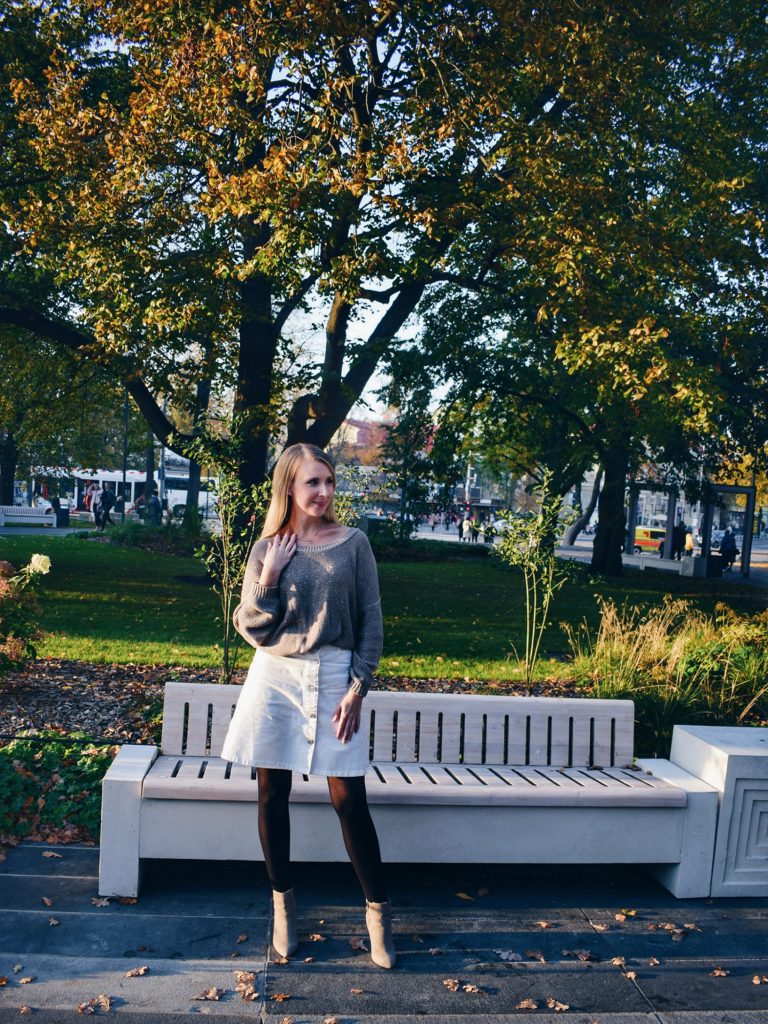
The outfit I’ve got on in these pictures is a good example of re-styling old clothes.! The idea never crossed my mind that I could pair that particular, enormous pullover with that summer-like skirt and together make them an Autumn-appropriate outfit.
But I did and it totally works! When you create new outfits with old clothes the feeling of elation is the same as you’d get when leaving a store with a new outfit in the bag.
Second hand shopping & clothing swaps
To bring a little bit of community feel to slow fashion, bring your friends to the mix as well. Instead of heading to the high street head to a second hand store to see if you can find unique treasures there. Or do as I do:
Me an my friends call everyone over when one of us has the closet-cleaning craze. We each go through the things and every time there’s something that ticks the box. If you think about it, it’s sort of a mixture of vintage shopping and recycling. What could be more sustainable?

Find the corner stones of your wardrobe
What you also need to do is to accept the fact that trends go around and around. Those of us who were born in the 90’s have seen platform heels come and go at least a dozen time by now. So, you don’t need to buy a new wardrobe every time a season changes in order to stay on top of the trend wave.
Leopard print is another perfect example of this. It’s always trendy but it becomes TRENDY again and again every couple of years. Same goes for those cork wedges, wide leg jeans, shoulder pads, etc., etc. Basically, by having these items in your closet, you are always dressed to impress:
- white T-shirt
- a pair of blue jeans (any leg width goes)
- a blazer
- leopard print skirt of dress
- cork wedges or a pair of platform heels
- oversized wool jumper
If you’ve already got them, just take good care of them and you’ll be a fashionista forever for a lot less money. And if you don’t yet own all of these, make sure you invest in quality!
Final Thoughts
Let’s not kid a kiddo, a change like this comes slowly. Bloggers and Insta influencers will continue to push products onto your smart phone screens in the future as well. But it’s up to you to take a step back and think “Do I already have a product like that, which I could re-style?” Odds are, you definitely do.
And even if change is slow, that doesn’t mean we shouldn’t strive towards it. Because the more of us start to pay attention to what we spend our money on the more clothing industry needs to pay attention and make changes accordingly.
I’m not saying “Stop shopping for good!”, hell to the no. I love shopping. But there’s more enjoyment in buying a piece that you know will last and look good for years rather than having to throw it away after 2 washes because there’s a hole in the middle of the fabric.
We’ve already embraced Slow Living, so time to move on to Slow Fashion. ;)