Most visitors to Vietnam see the same three postcards: motorbikes streaming through Hanoi’s Old Quarter, limestone islands rising out of Halong Bay, and paper lanterns glowing over Hoi An’s river. Those places have earned their reputation.
Travelers willing to leave the main circuit, though, find a country that moves at a completely different speed, one shaped by rice terraces cut into mountainsides, rivers that double as roads, and cave systems still being mapped by researchers.
Exploring that version of the country usually starts with picking the right region to slow down in, and Vietnam packages that cover the north, the delta, or the central karst belt tend to open up a side of Vietnam most short trips skip entirely.
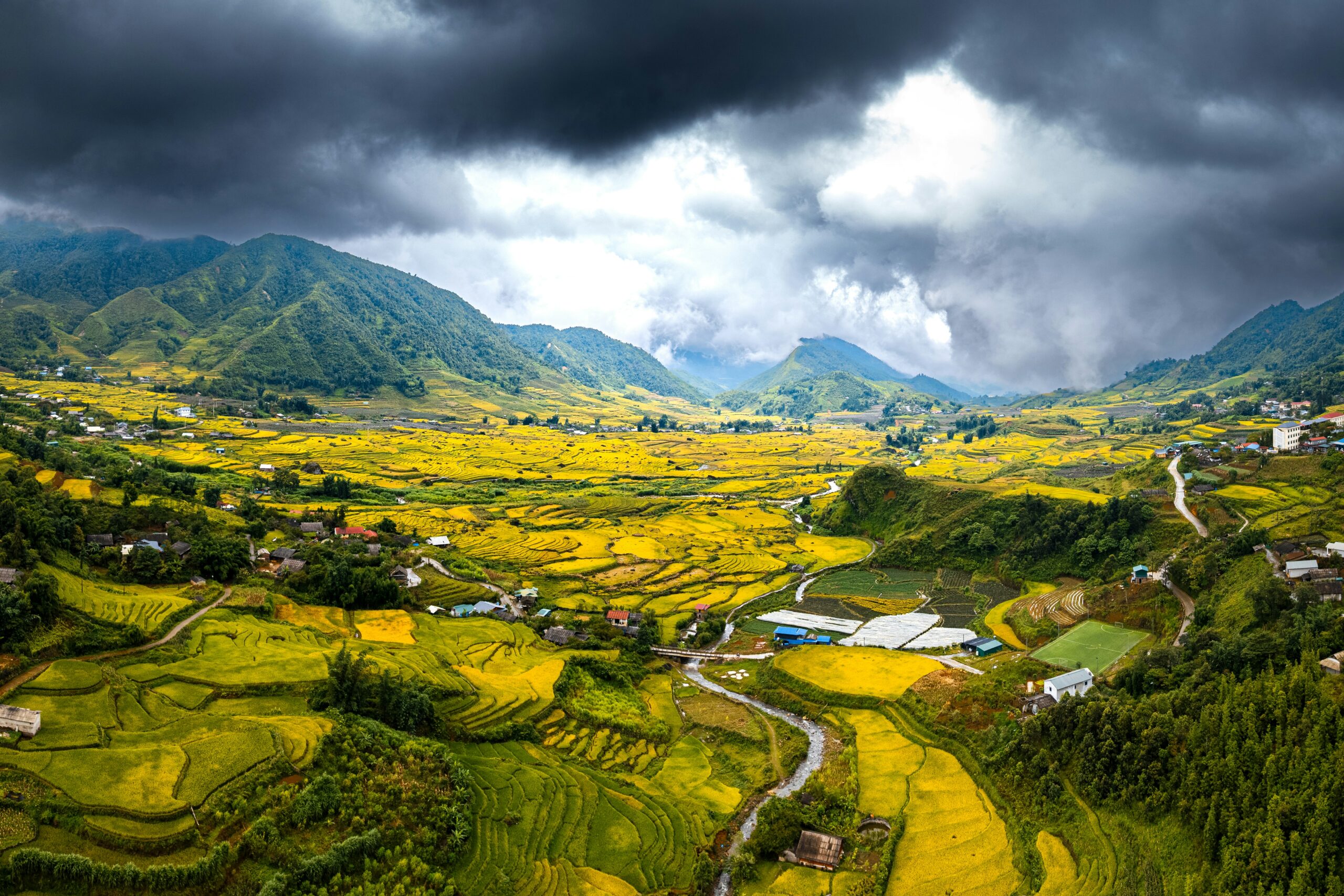
Sapa’s Terraces Hold Generations of Work
In the far northwest, near the Chinese border, the town of Sapa sits above a valley carved into rice terraces that have been farmed the same way for centuries. The Hmong, Red Dao, and Tay communities who live here still plant and harvest by hand, and walking the trails between villages means passing through working farmland rather than a park built for tourists.
Late September through November brings the harvest, when the terraces turn gold, while March through May is planting season and the fields fill with water that mirrors the sky.
Homestays run by local families are common along the main trekking routes, and staying overnight usually means a shared meal cooked over a wood fire and a chance to see daily life that has little to do with sightseeing schedules.
Fansipan, the highest peak in Vietnam, looms over the valley and can be reached either by a multi-day hike or a cable car for those short on time. Either way, the pace here rewards patience more than speed.
Life Measured by the Tide in the Mekong Delta
South of Ho Chi Minh City, the Mekong River splits into a maze of channels that support one of the most productive farming regions in Southeast Asia. Boats do the work that roads handle elsewhere, carrying everything from schoolchildren to fruit harvests along waterways lined with coconut palms and rice paddies.
The floating markets at Cai Rang and Phong Dien open before sunrise, when vendors hang samples of their produce from tall poles so buyers can spot a boat selling pineapples or dragon fruit from a distance.
Small workshops along the riverbanks turn coconut into candy, rice into paper, and sugarcane into brown sugar blocks, often using methods that have changed little in generations.
Staying in a stilt house for a night or two shows how closely daily life here follows the rhythm of the tides rather than the clock, and meals tend to arrive straight from the water or the garden outside. It is a slower, wetter version of Vietnam than most travelers expect.

Phong Nha’s Underground World
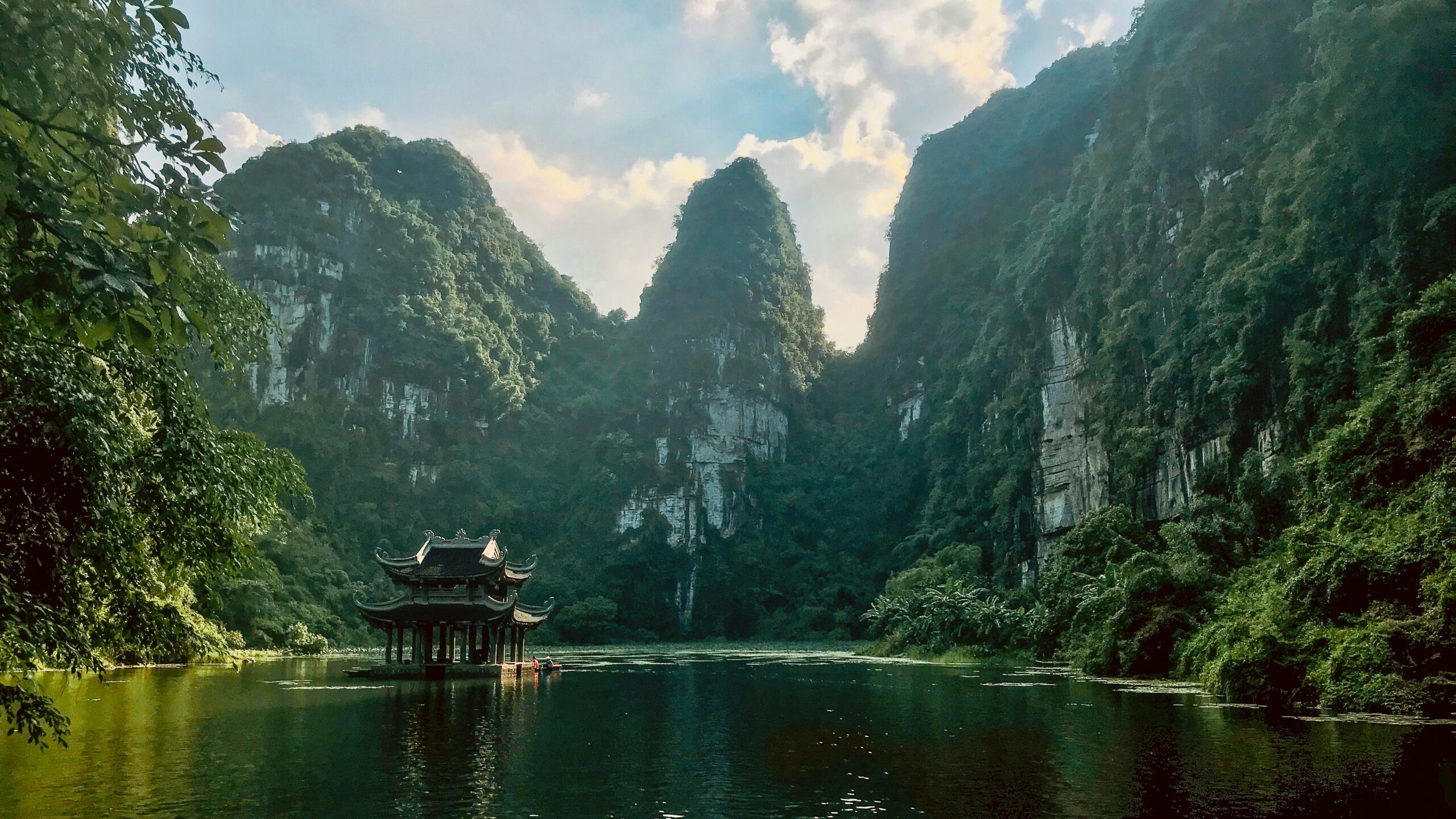
Phong Nha-Ke Bang National Park, in the narrow waist of central Vietnam, protects one of the oldest karst landscapes in Asia and a cave system that researchers are still exploring. Son Doong, the largest cave passage on Earth, sits inside the park and can only be visited on a permit-limited multi-day expedition that books out months in advance.
More accessible caves, including Phong Nha Cave itself and the dramatically lit Paradise Cave, can be visited on a day trip and still give a sense of the scale involved, with chambers tall enough to hold several buildings stacked on top of each other.
Dark Cave adds a more active option, combining a zip-line entrance with mud baths and a swim through an underground river. Local guiding cooperatives, many staffed by former loggers retrained as conservation workers after the park’s creation, run much of the tourism here, which has turned protecting the caves into a source of income rather than a competing interest.
Few places in Vietnam show tourism and conservation growing up together quite this closely.
Villages Instead of Hotel Chains
Across all three regions, the accommodation options that make slow travel possible tend to be family-run rather than corporate. A homestay in a Sapa village, a stilt house on a Mekong tributary, or a guesthouse near Phong Nha usually means the money spent on a room and a meal stays largely within the household hosting it.
These arrangements rarely come with air conditioning or a printed menu, and travelers should expect shared bathrooms, early mornings tied to farm or river schedules, and conversations that depend on hand gestures more than shared language.
What they offer in return is a much closer look at how people actually live outside Vietnam’s cities. Booking through a local cooperative or a small operator with direct ties to the village, rather than a large resale platform, tends to put more of the spending where it is intended to go.
For travelers used to hotel loyalty programs, the adjustment takes a day or two, but most find the trade worth making.
Getting Between the Regions
Covering Sapa, the Mekong Delta, and Phong Nha in one trip takes some planning, since the three sit at opposite ends of the country. An overnight train or sleeper bus connects Hanoi to Sapa, while flights from Ho Chi Minh City reach the delta town of Can Tho in under an hour. Phong Nha is best reached by flying into Dong Hoi, the nearest airport, then arranging a short transfer to the park.
Packing needs to account for real temperature swings: the northern highlands can turn properly cold at night between November and February, while the delta stays hot and humid year round.
A light rain layer earns its space in the bag no matter the season, since sudden downpours are common across all three regions. Travelers who build a few unplanned days into the route tend to have an easier time than those working on a tight schedule, since transport delays are common on rural roads.